Choose your direction.
Picture your life in five years: Health, Mind, Craft, Community, Joy.
Turn what you want into weekly plans. After fourteen rated days, see which habits go with better days.
Your plan
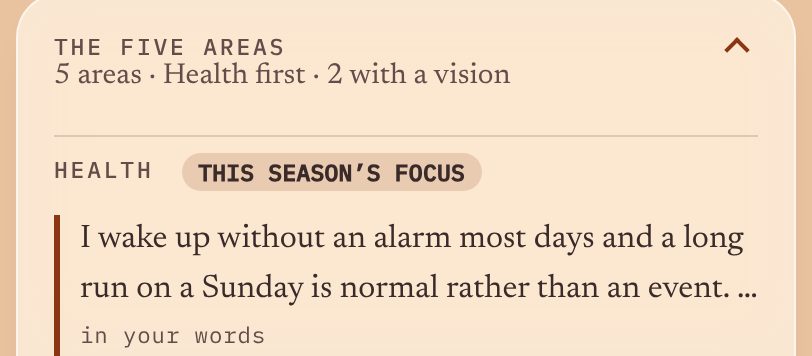
Five years. Health, Mind, Craft, Community and Joy, each in your own words.
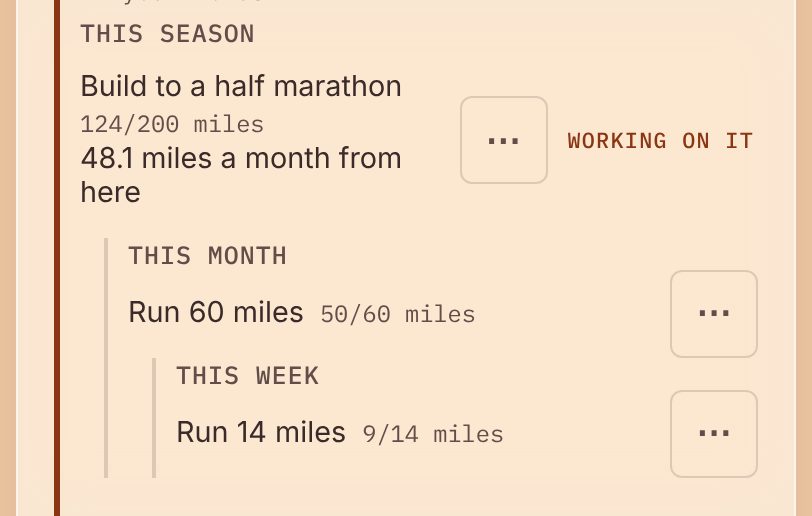
This season. One or two goals, broken into months and weeks.
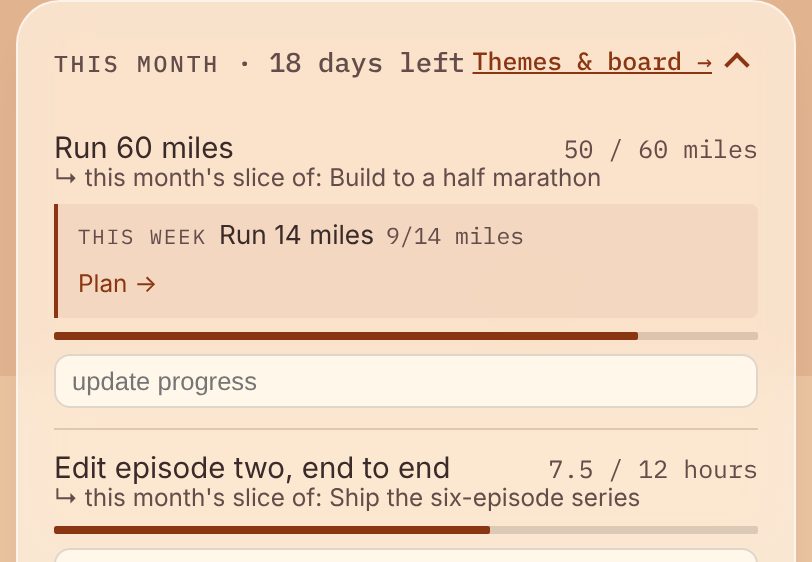
This month. Season goals, paced for this month.
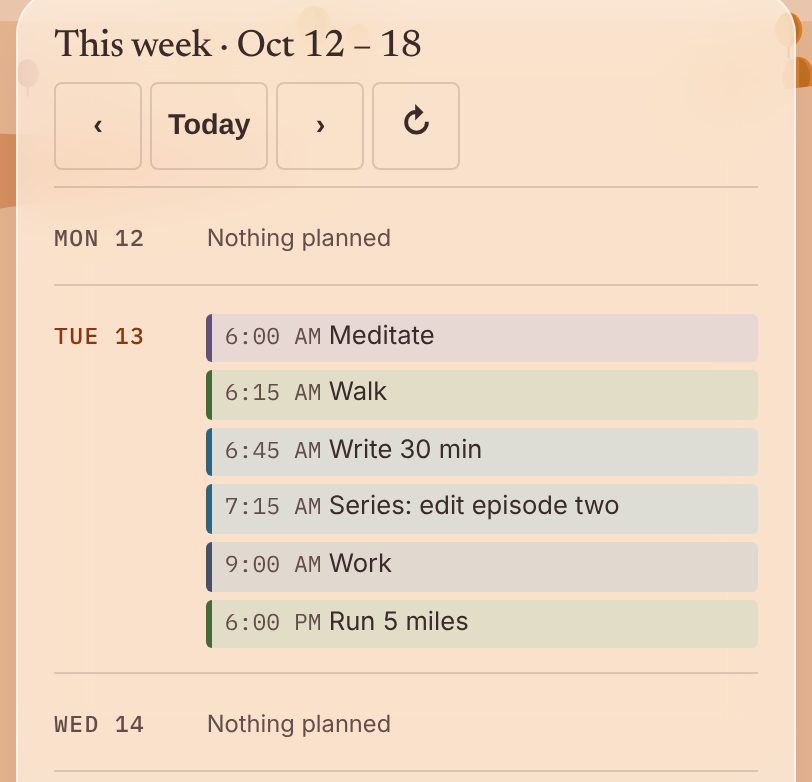
This week. Blocks around the hours already taken.
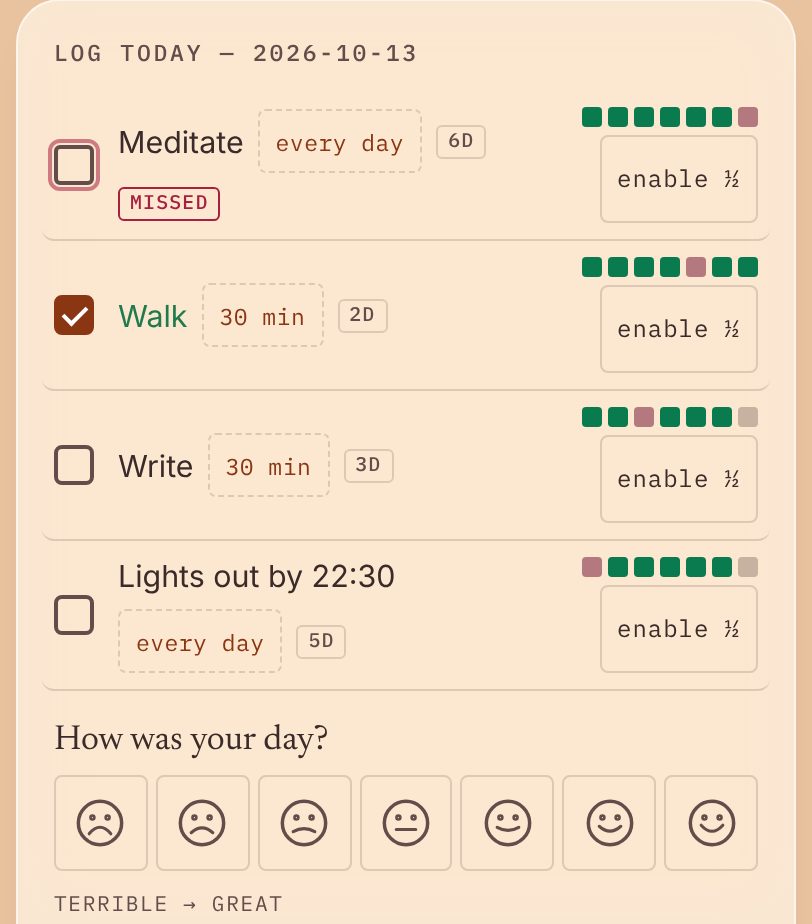
Tonight: tick habits, rate your day.
Small steps
Picture your life in five years: Health, Mind, Craft, Community, Joy.
Plan seasons, months and weeks around your commitments.
Rate 14 days to see which habits go with better days.
What your data shows
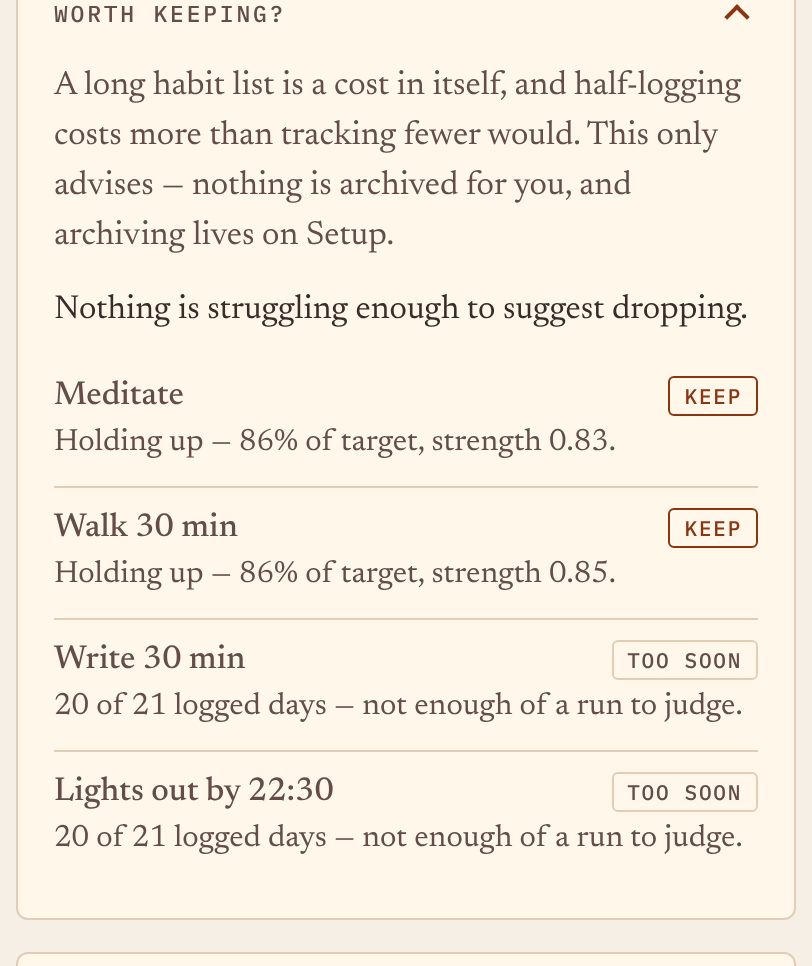
Influx Life only tells you what your data supports, with the day count behind each finding.
Why I built it
“What do I want an ordinary Tuesday to look like in five years? Start there, and work backwards.”
I wanted to finish projects and learn which habits helped.
I've always tracked things. It's probably how I ended up a data scientist: numbers reveal patterns, and patterns let you make better decisions. I ran the numbers on my health, on my board games, and eventually on my life as a whole. That's where the name comes from.
I built the first version to show me which habits actually went with my better days. Then I wanted to plan my day so there was room for them, and found a day wasn't enough. So I planned the week, so I knew which days were for which goals. Then the month, so I'd stop starting twenty projects and finishing none.
All of it comes down to one question: what do I want an ordinary Tuesday to look like in five years? Start there, and work backwards. A vision, cut into seasonal focuses, monthly objectives, a weekly plan, and concrete blocks on the calendar.
I made this to reach my own goals. Building it was the first monthly goal. It helps my ADHD mind focus, and I'd like it to help you reach yours too.
The price
Three months free, no card. Then $79 a year.
Trial starts at signup. If you stop paying, your account stays readable.
Questions
No, and the habits are the smaller half. The planner is the reason to use it: a vision for five areas of life, cut down into a season, a month and a week, ending in blocks on a real week laid out around what you have already committed to. The habits sit underneath that plan, and the statistics say which of them are paying for their place in it. Most trackers give you a grid of ticks and no answer about what the ticks were for.
It reads it, and changes it only when you tap. If you connect Google Calendar, your meetings appear on the week as fixed blocks so nothing is scheduled on top of them. You can move, retime or delete one of them from the planner, or send one block to Google, and each of those happens only when you tap it. Your plan lives on Influx Life's own planner.
Honestly: Garmin is an owner-only beta today. Garmin blocks the kind of connection this app would need from a server, so it currently syncs from a machine at home. Oura connects properly, and Apple Health arrives with the iPhone app. If you have a Garmin, say so when you sign up and you will be the reason it gets finished.
A web app you add to your home screen, where it behaves like any other app — full screen, its own icon, notifications. The Play Store and App Store listings are in progress.
Three months free, no card. Then $79 a year. The three months count from the day you make your account, and nothing is charged before they end. The same price everywhere, cancellable in two taps — and if you stop paying, your account goes read-only rather than dark, so your own history stays yours.